Once you've chosen your cabinet style and layout, one of the most important remaining decisions is the finish: painted or stained. This choice affects the look, the maintenance, the durability, and even the long-term flexibility of your kitchen design.
Both finishes have genuine strengths and real limitations. The right choice depends on your design preferences, lifestyle, and tolerance for maintenance. This guide gives you an honest comparison so you can decide with confidence.
Painted cabinets are finished with multiple coats of paint — typically a primer, two coats of paint, and a protective topcoat. Professional-grade cabinet paint is different from wall paint: it's formulated for adhesion, hardness, and resistance to daily wear. Cabinet finishes are usually either lacquer-based (sprayed in the factory) or high-quality acrylic (sometimes applied on-site).
The base material for painted cabinets is usually MDF (medium-density fibreboard) for the door and drawer fronts, with plywood or MDF for the cabinet boxes. MDF is preferred for painting because it has no grain pattern, doesn't expand and contract with humidity as much as solid wood, and provides a perfectly smooth surface.
Stained cabinets feature a semi-transparent finish that allows the natural wood grain to show through. The stain adds colour (from a light honey to a dark espresso) while the grain pattern, knots, and natural character of the wood remain visible. A clear topcoat — usually lacquer or conversion varnish — is applied over the stain for protection.
Stained cabinets must be made from real wood. The door and drawer fronts are typically solid hardwood (maple, oak, cherry, hickory, or alder), and the cabinet boxes are plywood with a matching veneer exterior.
Stained cabinets have the edge here. Minor impacts and daily wear are less visible on a textured wood surface than on a smooth painted one. However, painted cabinets with a catalyzed finish are far more durable than they were a decade ago, and premium painted finishes hold up well in most households.
Both finishes require regular cleaning with a soft cloth and mild cleaner. Avoid harsh chemicals and abrasive pads on either finish. Painted cabinets may need more frequent wiping in high-touch areas. Stained cabinets occasionally need re-oiling or a fresh topcoat in high-wear zones, though this is rarely needed within the first 10 to 15 years.
Painted cabinets in MDF are generally less expensive than stained solid-wood cabinets at the same quality tier. However, painted cabinets in solid wood (which some homeowners prefer for perceived quality) cost the same as or more than stained, because the painting process is more labour-intensive.
Currently, painted cabinets have a slight edge in resale appeal because they dominate the market and buyer expectations. However, natural wood cabinets are trending strongly in 2026, and well-done stained cabinets in contemporary finishes (light oak, walnut) have excellent resale appeal. Outdated stain colours (golden oak, dark cherry) can hurt resale.
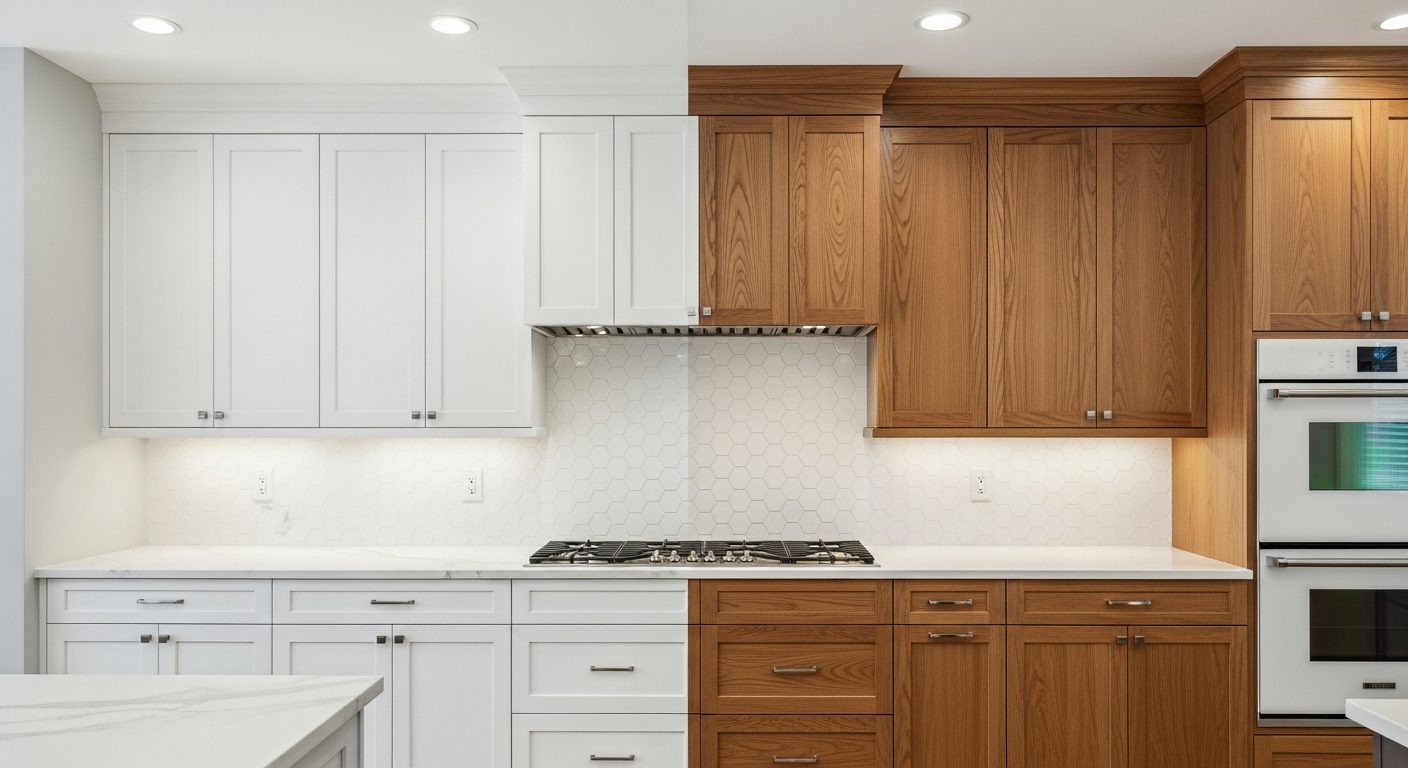
Painted cabinets win for colour flexibility. Stained cabinets win for texture and warmth. The best kitchens often combine both — for example, painted perimeter cabinets with a stained wood island — to get the benefits of each.
You don't have to choose one or the other. Many of the most striking kitchens combine painted and stained cabinets to get the best of both worlds. Popular combinations include:
This mixed approach adds visual depth and allows you to introduce wood warmth without committing to an all-wood kitchen.
See our full range of cabinet door styles in both painted and stained finishes. Comparing them side by side is the best way to understand how each looks and feels in person.
Photos and descriptions can only tell you so much. The texture of a wood grain, the smoothness of a painted finish, and the way light plays off each surface is something you need to experience in person.
Visit our showroom at 899 Victoria St N in Kitchener to see painted and stained cabinets side by side. Touch them. Open the doors. Look at them under different lighting. Our team can answer your questions and help you choose the finish — or combination of finishes — that works best for your kitchen. Contact us or call (519) 744-2284 to plan your visit.
Answers to your renovation questions
Painted cabinets usually cost a bit more than stained because they require extra prep, primer, multiple coats, and a topcoat, with dark colours costing the most due to added coats. Stained finishes can be quicker to apply on solid wood. The gap is modest and depends on colour and wood species. For the bigger budget picture, see our Kitchener kitchen renovation cost guide.
Stained cabinets generally hide daily wear better because colour is absorbed into the wood grain, so small chips don't reveal a contrasting base the way paint can. Painted finishes look crisp but are more prone to chipping at edges and hairline cracks at joints. Both last when well built on solid wood. Our doors and drawer fronts are solid maple on a plywood box, never MDF, which affects how each finish wears, as our solid maple vs. MDF guide explains.
Yes, and it's a popular look. A common approach is stained lower cabinets or an island paired with painted uppers, blending the warmth of natural wood with the crisp colour of paint. Two-tone kitchens also let you ground the room with a darker base. The cabinet door style you choose affects how each finish reads. Explore options in our kitchen cabinet styles guide before deciding on a finish combination.
Neutral painted cabinets in white, greige, or soft sage have broad buyer appeal right now, while classic stained wood never truly goes out of style. For resale, the safest bet is a timeless colour in a quality finish over a sound material. A renovation built to last adds the most value. Our guide on increasing home value with a kitchen renovation covers what buyers actually notice.
Yes, chipping is the most common complaint about painted cabinets, especially on high-use edges near handles and drawer fronts, where paint can flake and reveal the material underneath. A catalyzed topcoat minimizes it but no painted finish is immune. Stained finishes hide wear better. Touch-ups also differ, so weigh maintenance honestly. See both finishes side by side on real solid maple doors at our showroom before choosing.
Yes, but it's involved. Converting stained cabinets to a painted finish requires thorough sanding, priming, and proper cabinet-grade paint to adhere and hold up, which is best done professionally for a durable result. Going the other way, paint to stain, is much harder. If you expect to change looks, factor that in early. Our refacing vs. replacing guide compares your options when you want a new look down the road.
Have more questions? We’re here to help.
Come see the cabinets and finishes in person at 899 Victoria St N, Kitchener — or fill out the form and our team will get back to you about your kitchen or bath project.

Answers to your kitchen renovation questions
Simply fill out our online form or call us during business hours. We’ll schedule a visit or in-showroom consultation at your convenience.
We provide kitchen cabinets, bathroom vanities, countertops, and accessories. All products are available in a range of styles and finishes.
Yes, we work with both homeowners and contractors across Kitchener, Waterloo, Cambridge, and Guelph.
Absolutely. Visit us at 899 Victoria St N, Kitchener, ON. No appointment needed during business hours.
All cabinetry and countertops come with a manufacturer’s warranty. Details are provided at purchase or upon request.
Most kitchen or bath projects are completed within 2–4 weeks after final measurements and product selection.
Need more information? We’re here to help.