
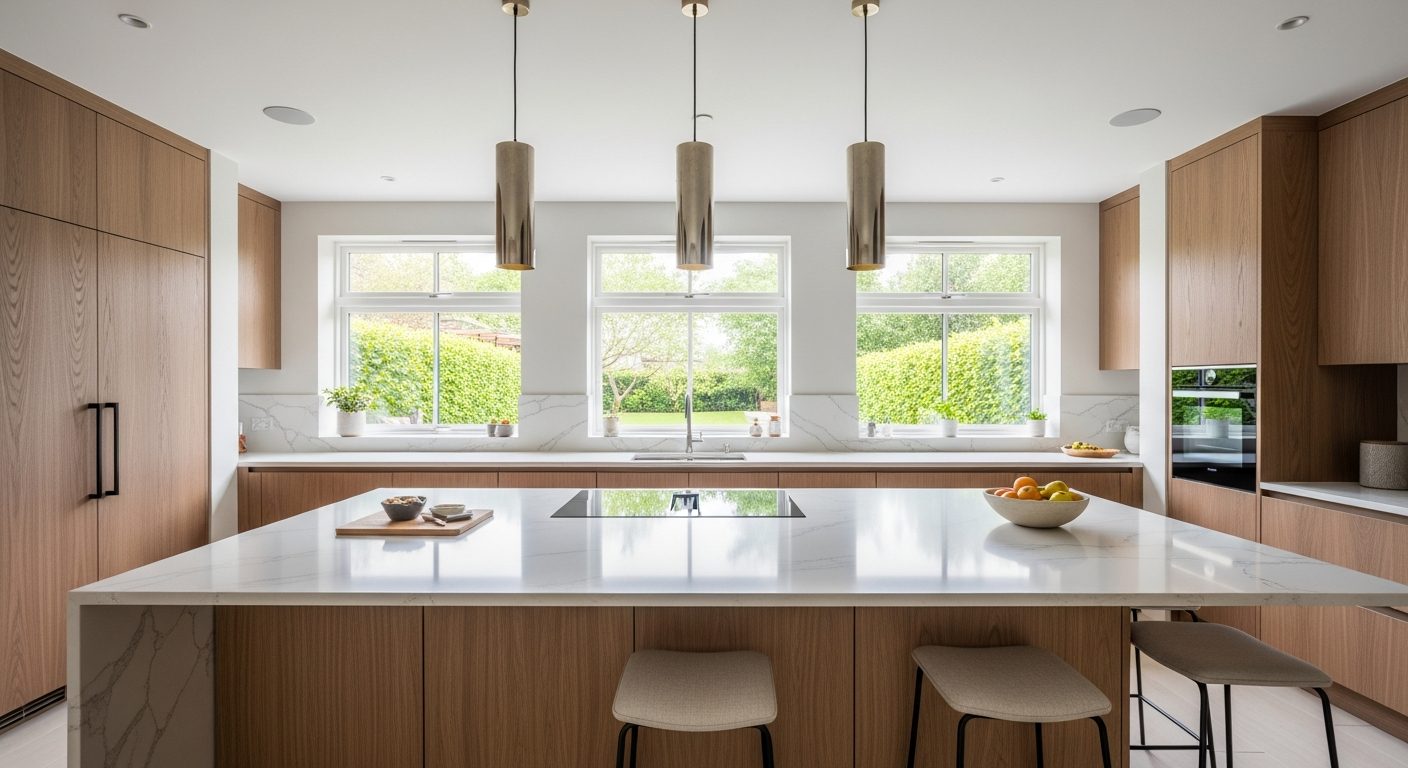
A kitchen island can transform how you cook, entertain, and live in your home. It adds counter space, storage, and a natural gathering point that draws people together. But getting the most out of an island means thinking carefully about size, layout, and design before you commit.
Whether you're renovating a century home in downtown Kitchener or building new in a Waterloo subdivision, the right island can make your kitchen feel twice as functional. The wrong one can make it feel cramped and awkward. This guide walks you through the key decisions so you get it right the first time.
Island sizing isn't about going as big as possible. It's about matching the island to your kitchen's footprint and how you actually use the space. Here are some general guidelines to keep in mind:
This is where many homeowners make a critical mistake. You need adequate clearance on every side of the island for the space to function properly:
A quick test: measure your kitchen floor and tape out the island dimensions plus clearance zones. Walk through the space, open your dishwasher and oven, and pull out chairs. If anything feels tight, scale the island down. A slightly smaller island with proper clearance will always feel better than an oversized one that cramps the room.
The best island layout depends on your kitchen's shape, where your appliances sit, and how your household uses the room. Here are the most common configurations:
All your major appliances and cabinetry line one wall, with the island running parallel a few feet away. This is common in open concept homes where the kitchen flows into a living or dining area. The island serves as both workspace and visual boundary between the kitchen and the rest of the room.
Cabinetry and counters wrap two walls, and the island sits in the open space. This is one of the most popular layouts in the Kitchener-Waterloo area because it balances workspace with social space. The island usually faces the living or dining room, making it easy to chat with guests while cooking.
Three walls of cabinetry with an island in the centre. This layout offers maximum storage and counter space but requires a large kitchen — at least 13 to 14 feet wide — to maintain proper clearance. It works well in larger homes where the kitchen is a dedicated room rather than part of an open floor plan.
Parallel counters with a small island or cart between them. This only works in wider galley kitchens (12 feet or more). In narrower spaces, a portable kitchen cart on wheels can provide some of the same benefits without permanently eating into your walkway.
Once you've settled on size and layout, the fun part begins: deciding what your island actually includes. Here are the features worth thinking through:
Island seating is one of the most requested features in kitchen renovations. Plan for 24 inches of counter width per seat for comfortable spacing. Counter-height islands (36 inches) use standard chairs, while bar-height islands (42 inches) need taller stools. Many families prefer counter height because it's more comfortable for kids and easier to work at while standing.
Placing a prep sink or the main sink in the island can improve your kitchen's workflow, keeping the cooktop and oven along the wall while the sink faces the living area. The trade-off is plumbing cost — running water and drain lines to an island adds to your renovation budget. In older Kitchener homes with basements, this is usually straightforward. On a concrete slab, it's more expensive.
An island cooktop lets you face guests while cooking, but it requires a ventilation solution. A ceiling-mounted range hood or downdraft vent is necessary, and both add cost. Consider whether the cooking splatter and cleanup of an exposed cooktop fits your lifestyle.
The underside of your island is prime storage territory. Common options include:
Building code in Ontario requires electrical outlets on kitchen islands. Plan outlet placement carefully — pop-up outlets in the countertop keep the look clean, while outlets on the side of the island are more affordable and practical. Make sure at least one outlet is on the seating side for charging phones and laptops.
Your island countertop should balance durability, aesthetics, and budget. Many homeowners choose a statement material for the island that complements but differs from the perimeter counters. For example, quartz along the walls with a waterfall-edge marble-look island creates a striking focal point.
Popular island countertop materials include quartz, granite, marble, and butcher block. Each has different maintenance needs and price points. If you're weighing your options, our guide to stone countertops covers the pros and cons of each material in detail.
The cabinet style on your island sets the tone for the whole kitchen. Shaker-style doors remain the most versatile choice — they work with both traditional and modern designs. Flat-panel (slab) doors create a sleek, contemporary look. Raised-panel doors suit more classic or formal kitchens.
Many homeowners choose a contrasting colour for the island cabinets. A navy or charcoal island against white perimeter cabinets is a popular combination in the Kitchener-Waterloo area right now. Browse our kitchen cabinet door styles page for inspiration on finding the right match.
After helping homeowners across Kitchener, Waterloo, Cambridge, and Guelph plan their kitchens, we've seen these mistakes come up repeatedly:
The best kitchen island ideas start with understanding your space, your habits, and your priorities. Measure carefully, think about how you'll actually use the island every day, and don't rush the design process.
If you're ready to explore island options for your kitchen renovation, visit our showroom at 899 Victoria St N in Kitchener. We carry a wide range of cabinetry, countertops, and design options, and our team can help you find the right combination for your space and budget. Get in touch or call us at (519) 744-2284 to get started.
Answers to your renovation questions
Leave at least 36 inches between the island and any counter, wall, or appliance, with 42 to 48 inches ideal so two people can pass or work side by side. Behind seating, allow 44 to 48 inches so stools can pull out. Tape out the footprint before committing. Proper clearance matters more than maximum size, and it ties directly into your overall kitchen layout and work triangle.
It can. Running water and drain lines to an island adds plumbing cost, and the amount depends on your home. In older Kitchener homes with accessible basements, it's usually straightforward; on a concrete slab, it's more expensive. Factor it in early so it doesn't surprise your budget. A sink in the island also shapes your work triangle. For broader budgeting, see our Kitchener renovation cost guide.
Quartz is a top island choice because it's durable, non-porous, and never needs sealing, standing up to heavy prep and gathering. Many homeowners pick a statement material for the island that complements the perimeter counters, such as a waterfall edge. Match durability to how hard you'll use it. Compare options in our guide to choosing a countertop material, then see slabs at our Kitchener showroom.
As a rule of thumb, your kitchen should be at least about 13 feet wide to fit even a modest island while keeping the minimum 36-inch walkways on each side. U-shaped layouts with an island need 13 to 14 feet or more. Smaller kitchens may do better with a peninsula or cart. If space is tight, our small kitchen ideas guide offers alternatives that still add prep space and storage.
Plan about 24 inches of counter width per seat for comfortable spacing, so a 5-foot island seats two and a 7-to-8-foot island seats three to four. Counter-height islands (36 inches) use standard chairs; bar-height (42 inches) needs taller stools. Leave clearance behind for pulling out. Seating is one of the most requested island features. Design it in 3D first by booking a free design consultation with our team.
A waterfall edge, where the countertop runs vertically down the island sides, creates a striking focal point but uses much more material and fabrication labour, adding meaningful cost. It's worth it if a statement island anchors your design and budget allows. For a quieter look, a standard edge saves money. See how it affects pricing in our Kitchener-Waterloo quartz cost guide before deciding.
Have more questions? We’re here to help.
Come see the cabinets and finishes in person at 899 Victoria St N, Kitchener — or fill out the form and our team will get back to you about your kitchen or bath project.