10 Years on Victoria StreetSave up to $1,000 on your kitchen or bath. Print your coupon and bring it in.Get the coupon
✕
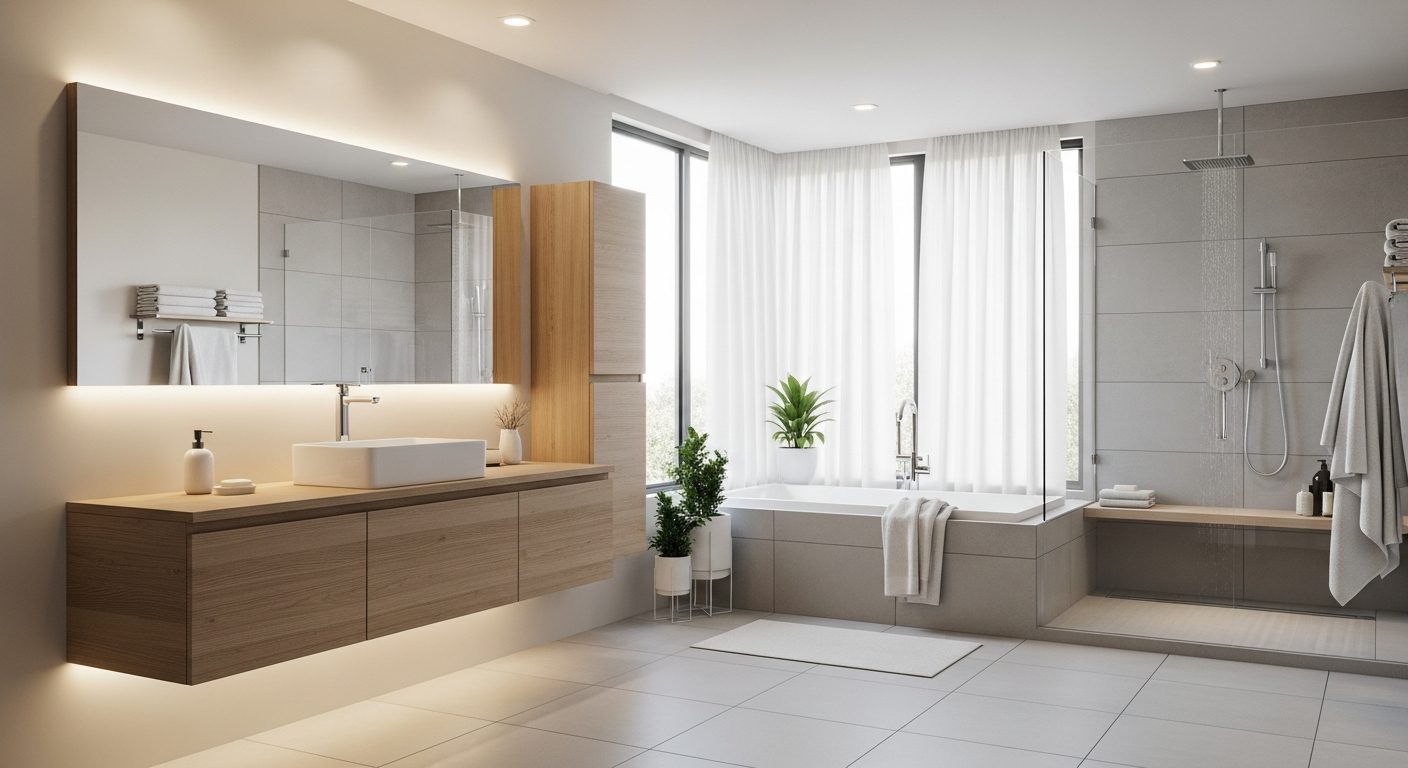
When shopping for a new bathroom vanity, one of the first decisions you'll face is whether to go with a wall-mounted floating design or a traditional freestanding unit. Each style has distinct advantages and trade-offs, and the right choice depends on your bathroom size, aesthetic preferences, installation constraints, and practical needs.
Understanding the differences between a floating vs freestanding vanity helps you make a choice you'll be happy with for years to come. This guide covers everything from aesthetics and storage to installation requirements and maintenance considerations.
A floating vanity, also called a wall-mounted or wall-hung vanity, is attached directly to the wall with no legs or base touching the floor. The cabinet appears to "float" above the floor, typically mounted 6 to 12 inches off the ground. All plumbing connections are routed through the wall behind the unit.
Floating vanities have gained enormous popularity in modern bathroom design and are a frequent request among homeowners renovating bathrooms in the Kitchener-Waterloo area.
A freestanding vanity sits directly on the bathroom floor, supported by its own base, legs, or feet. This is the traditional vanity design that has been the standard in bathrooms for generations. Freestanding vanities come in every style from ornate traditional furniture-style pieces to sleek contemporary designs.
Floating vanities create a clean, contemporary look that makes the bathroom feel more open and spacious. The visible floor beneath the vanity visually expands the room, which is particularly beneficial in smaller bathrooms common in many Kitchener-Waterloo homes built before the 1990s.
The streamlined appearance of a floating vanity works beautifully with modern, minimalist, and Scandinavian-inspired bathroom designs. It pairs naturally with wall-mounted faucets, frameless mirrors, and clean-lined accessories. The visible floor space also provides an opportunity to showcase attractive floor tile, including patterns or feature tiles that would be hidden by a freestanding unit.
Freestanding vanities offer incredible versatility in terms of style. From ornate Victorian furniture pieces with turned legs and decorative hardware to rustic farmhouse designs made from reclaimed wood, freestanding vanities can match virtually any design aesthetic.
Furniture-style freestanding vanities add warmth and character that floating vanities often lack. They ground the bathroom design and create a sense of permanence and substance. For traditional, transitional, and farmhouse bathroom designs, a freestanding vanity often feels more appropriate and cohesive.
Because floating vanities don't extend all the way to the floor, they generally offer less internal storage volume than comparably sized freestanding units. The base of a floating vanity starts at the mounting height rather than the floor, reducing the overall cabinet depth.
However, this limitation is offset by the open space beneath the vanity, which can be used for:
Many modern floating vanities compensate for reduced cabinet space with efficient internal organization: deep drawers with dividers, pull-out trays, and strategically placed shelving.
Freestanding vanities win on raw storage capacity. The cabinet extends from the floor to the countertop, providing maximum internal volume for drawers, shelves, and organizational accessories. This is a significant advantage for households with extensive toiletry collections or limited alternative storage in the bathroom.
Explore the full range of vanity sizes and configurations available to find the storage capacity that matches your needs.
Floating vanity installation is more complex than a freestanding unit and requires:
Freestanding vanities are generally simpler to install:
Cleaning is one of the biggest advantages of a floating vanity. With the entire floor exposed beneath the unit, mopping, sweeping, and vacuuming are effortless. There are no hard-to-reach corners where dust, hair, and moisture collect—areas that become grimy quickly in a bathroom environment.
This is particularly beneficial for:
Freestanding vanities are more challenging to clean around. The base or kick plate at the floor level creates crevices where dust and moisture accumulate. Furniture-style vanities with legs are easier to clean underneath than enclosed-base designs, but neither matches the accessibility of a floating vanity.
Moisture is also a concern with freestanding vanities. The base sits directly on the bathroom floor, and in a room with frequent water exposure, moisture can seep beneath the unit and damage both the vanity and the flooring over time. Good bathroom ventilation and wiping up water promptly help prevent this issue.
When properly installed on a structurally sound wall, a floating vanity is extremely durable. The elevated position protects it from floor-level moisture and water damage. However, the mounting hardware must be robust, and overloading the vanity beyond its weight rating can cause wall damage over time.
Freestanding vanities bear their own weight on the floor, so there's no stress on wall-mounting hardware. High-quality freestanding vanities built from solid wood or marine-grade plywood can last for decades. The primary durability concern is moisture damage to the base, which can be mitigated with proper bathroom ventilation and water-resistant materials.
In general, floating and freestanding vanities at equivalent quality levels cost about the same for the unit itself. However, the total installed cost differs:
If your bathroom already has in-wall plumbing from a previous floating vanity, the installation cost difference disappears. Similarly, if your bathroom requires a complete plumbing overhaul regardless, the incremental cost of in-wall plumbing for a floating vanity is minimal.
Here's a quick decision framework to help you choose between a floating vs freestanding vanity:
Choose a floating vanity if:
Choose a freestanding vanity if:
The best way to decide between a floating and freestanding vanity is to see and compare them in person. At Kitchen & Bath World, we specialize in solid maple freestanding vanities built to fit your space. Visit our Kitchener showroom at 899 Victoria St N to compare styles, finishes, and sizes in person.
Our design team can also evaluate your bathroom layout and plumbing situation to advise on which installation type is most practical for your space. Browse our gallery for bathroom design inspiration, or contact us at (519) 744-2284 to schedule a consultation. We serve homeowners throughout Kitchener, Waterloo, Cambridge, and Guelph.
Answers to your renovation questions
No. Kitchen & Bath World builds freestanding, corner, and standard vanities with solid maple doors on a plywood box, not floating or wall-mounted units. This comparison is informational to help you weigh the styles. If you love the modern look but want the storage and simpler plumbing of a freestanding unit, our team can design a clean-lined floor-standing vanity in 3D, with dovetailed drawers on concealed undermount roll tracks and soft-close hinges. Explore our bathroom vanities to see the range we build.
Freestanding vanities win on storage. Because the cabinet runs from floor to countertop, you get maximum internal volume for drawers and shelves, while a floating unit sacrifices depth for the open space beneath it. For households with lots of toiletries or limited bathroom storage, freestanding is the practical choice. See how to make the most of it in our bathroom vanity storage ideas guide.
Yes, considerably. Freestanding vanities work with standard floor-exit plumbing and sit on the floor, while floating units need in-wall plumbing, reinforced wall support, and perfectly level mounting. That makes freestanding faster and less costly to install, especially in older Kitchener-Waterloo bathrooms. Kitchen & Bath World handles design and installation in-house. Start with a free design consultation to confirm what your plumbing allows.
For a small bathroom, a corner or compact freestanding vanity sized to the room usually works best, freeing floor space without sacrificing storage. Many older Kitchener-Waterloo homes have tight bathrooms where a custom-sized unit fits better than a stock width. We build to your measurements rather than forcing a standard size. See recommended dimensions in our best vanity sizes for small bathrooms guide.
Choose a double vanity if two people share the bathroom each morning and you have at least 60 inches of width; a single suits smaller rooms and gives more counter and storage per sink. The decision is mostly about available wall length and how the bathroom is used. We design both in 3D to your space. Our single vs. double vanity guide walks through the trade-offs.
Solid wood faces on a plywood box are the most durable combination for a vanity, because bathrooms are humid and particle board or MDF can swell and crumble if water gets in. Kitchen & Bath World builds vanities with solid maple doors and drawer fronts on a cross-laminated plywood box, never particle board, so they hold up to daily use for decades. Check the door material and box construction before buying anywhere. Our solid wood vs. particle board comparison explains what lasts.
Have more questions? We’re here to help.
Come see the cabinets and finishes in person at 899 Victoria St N, Kitchener — or fill out the form and our team will get back to you about your kitchen or bath project.